Knowles Services Ltd Free to call · 8am–9pm 0800 772 0724

Types of loft insulation: what's in your loft, and what should be

By Dean Knowles, Knowles Services Ltd · Updated 9 November 2026
I'm Dean, and I survey and insulate lofts across Essex and London myself. In older homes I find all sorts up there. This guide shows the common types of old insulation, how to spot them, and what a properly insulated loft should look like.

Call Dean free: 0800 772 0724

The drawings on this page are illustrations to help you recognise each type. The photos further down are from real lofts I've worked on.

Old loft insulation: what you might find

If your loft was insulated decades ago, it probably has one of these. Some can be topped up. Others need clearing out first.

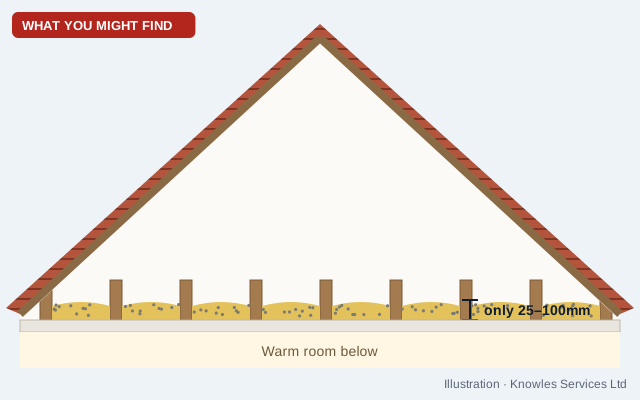
Illustration of old, thin fibreglass insulation between loft joists

Old, thin fibreglass rolls

How to spot it: Yellow or grey fluffy rolls between the joists, often only 25mm to 100mm deep. Over the years they sink, go grey with dust and leave the tops of the joists showing.

What to do: If it is dry and clean, it can usually be topped up to 270mm. If it is dirty or crumbling, it is better cleared out first.
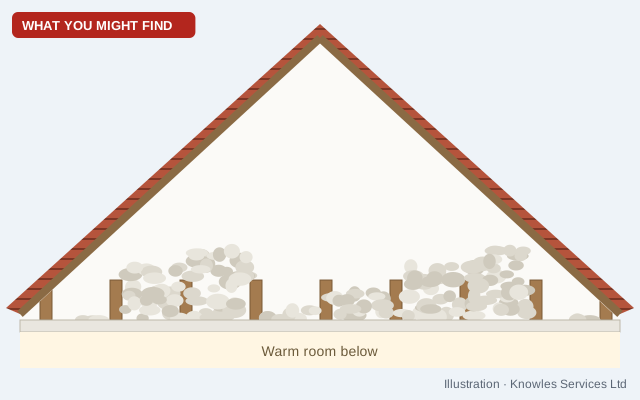
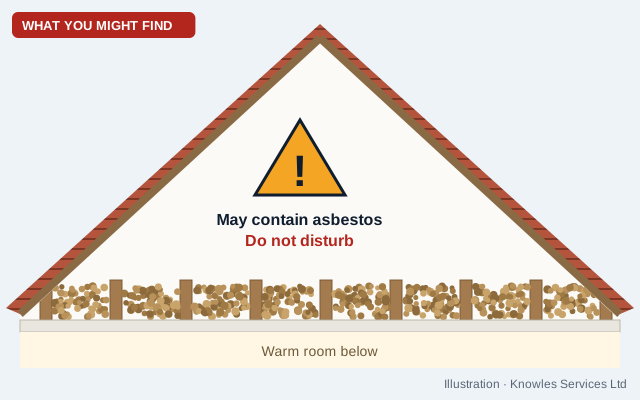
Illustration of uneven loose-fill blown insulation in a loft

Loose-fill blown insulation

How to spot it: Loose fibres, rather than rolls, that were blown into the loft. They tend to drift, so you see deep piles in some places and bare ceiling in others, often pushed into the eaves.

What to do: The bare patches lose heat and fibres blocking the eaves can stop the loft breathing. It usually needs levelling or clearing, then re-insulating properly. Some very old loose-fill, especially blue-grey or whitish fluffy fibres, can be asbestos. If I'm not sure, I won't touch it until it has been tested.

Illustration of vermiculite granules in a loft with an asbestos warning sign

Vermiculite

How to spot it: Small, lightweight granules like gravel or pebbles, usually grey-brown or gold, poured between the joists. It was used in older homes, often decades ago.

What to do: Do not touch it, sweep it or disturb it. Some vermiculite contains asbestos. If I find it on a survey I will stop and tell you straight. It needs testing, and if it does contain asbestos it must be dealt with by a licensed asbestos contractor before any other work is done.

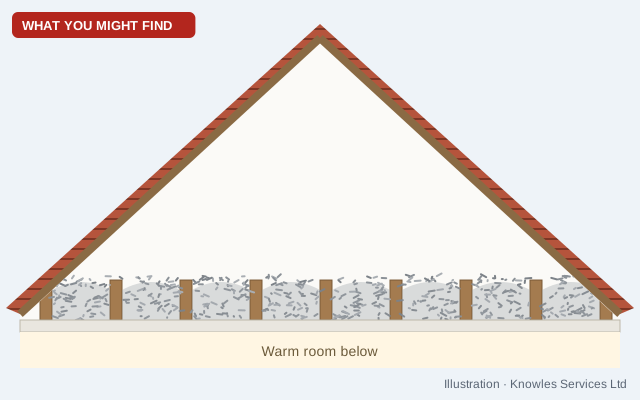
Illustration of grey shredded-paper cellulose insulation in a loft

Shredded paper (cellulose)

How to spot it: Grey, papery fibres, sometimes with flecks of newsprint. It is blown in loose, and over time it settles and can hold damp.

What to do: If it has settled or got damp it has lost much of its value. It usually needs clearing out and replacing.

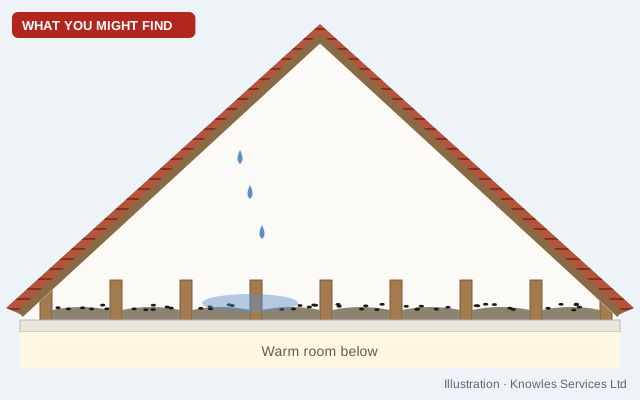
Illustration of flattened, damp loft insulation with rodent droppings and a roof leak

Damp, mouldy or contaminated insulation

How to spot it: Flattened, stained or dark patches, a musty smell, mould on the timbers, or droppings and chewed insulation from mice, rats or birds.

What to do: Wet or dirty insulation stops working. The cause (a leak, poor ventilation or a way in for pests) needs fixing first, then the old insulation is bagged up, the loft cleaned and new insulation laid.

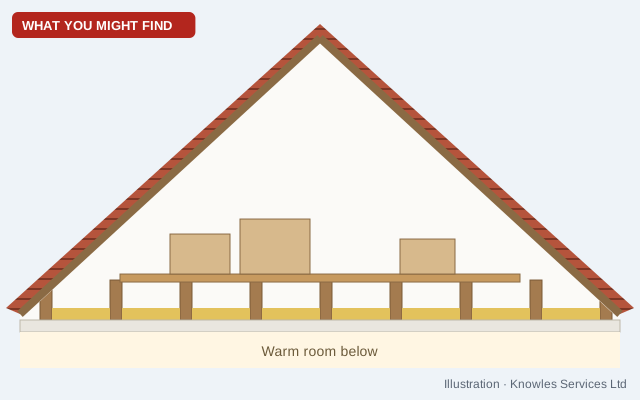
Illustration of loft boards laid straight onto thin, squashed insulation

Boards laid straight on top

How to spot it: Loft boards screwed directly onto the joists, with thin insulation squashed underneath and boxes stored on top.

What to do: Squashed insulation keeps far less heat in. Raised boarding on legs lets you keep your storage and still have the full depth of insulation underneath.

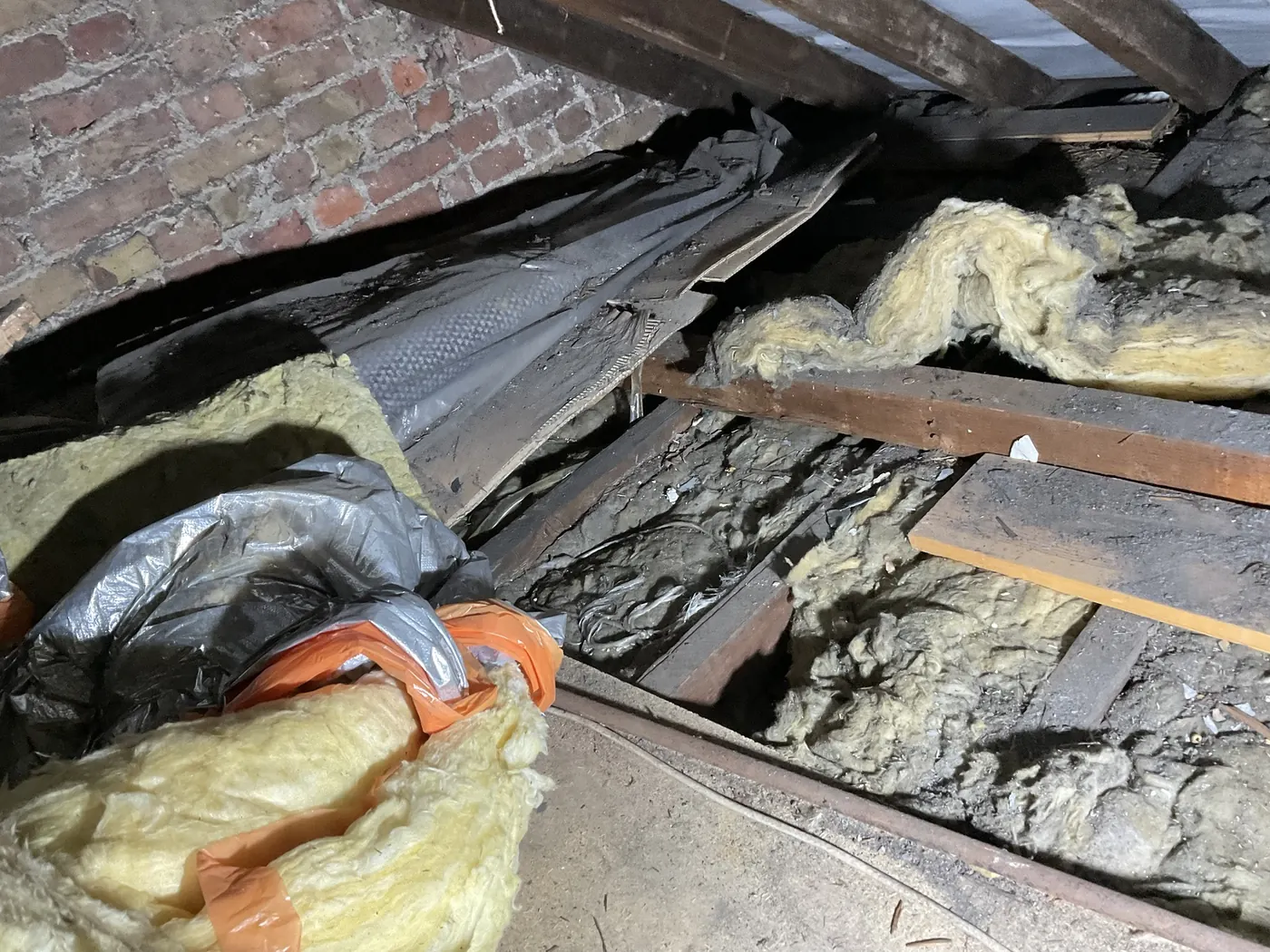
Real lofts I've cleared

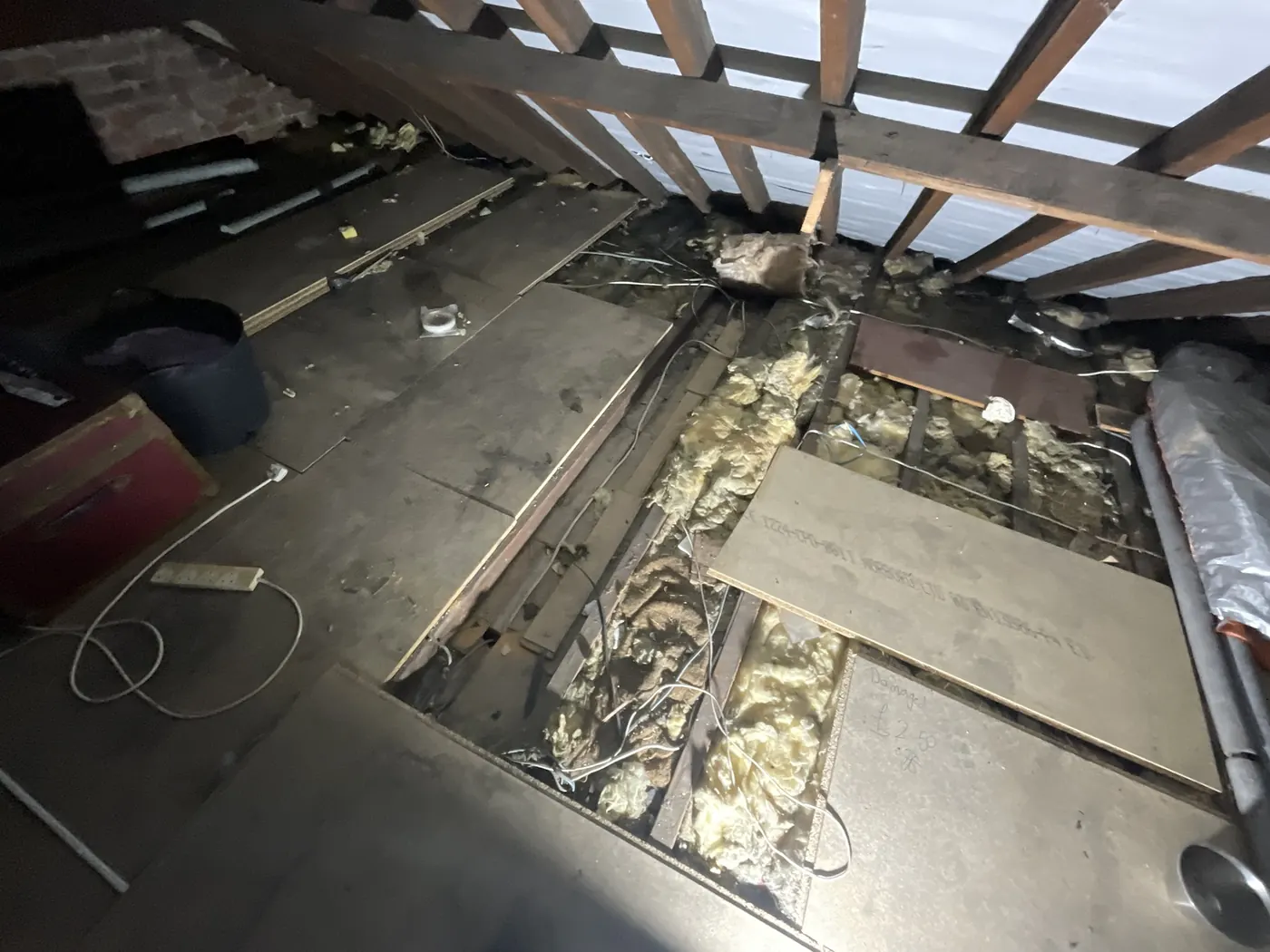
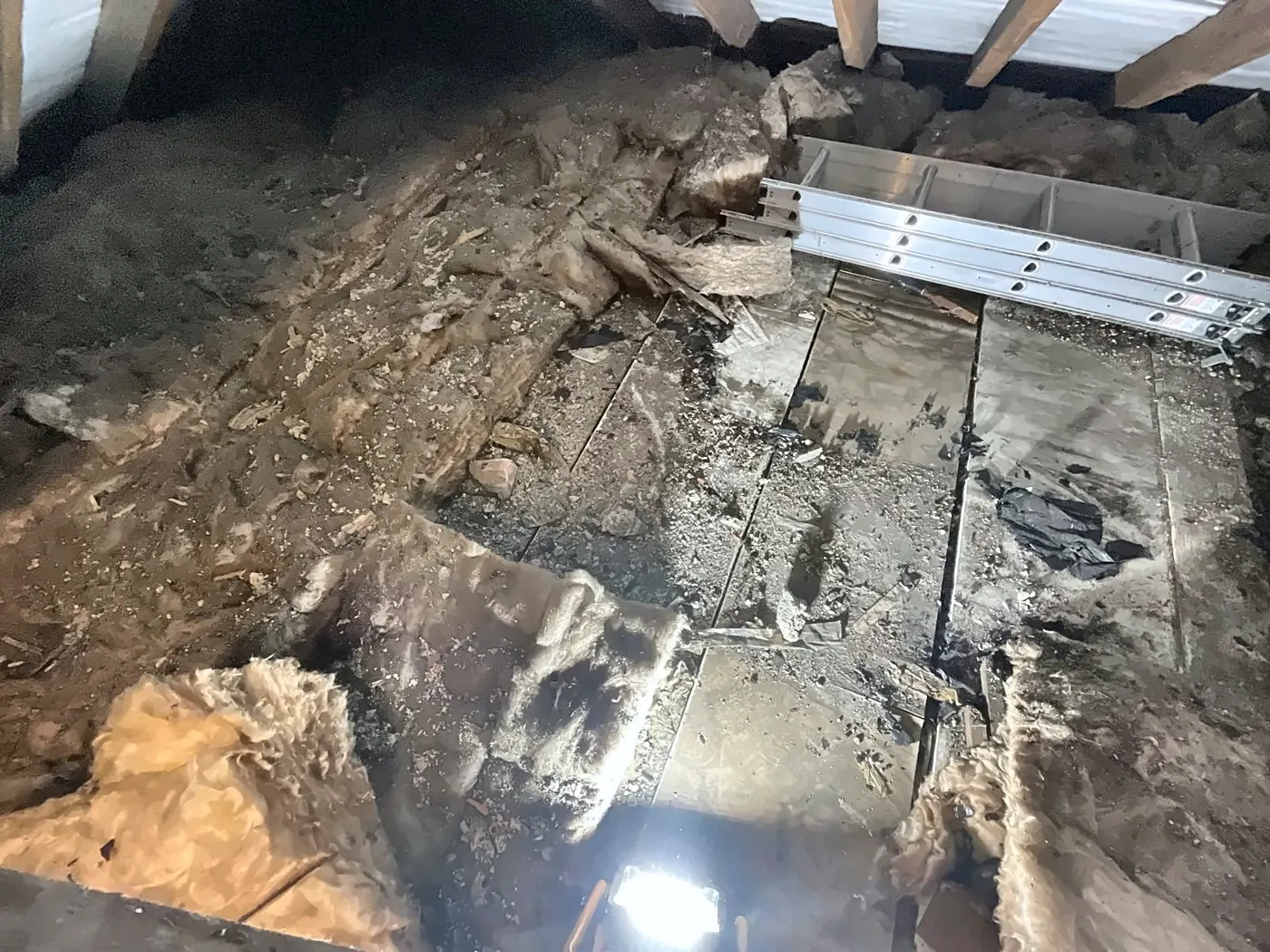
These are real photos from my own jobs, before the old insulation came out.

Old, flattened and dirty insulation in a Benfleet loft before it was cleared
Benfleet
Loose boards laid over thin insulation in a Benfleet loft
Benfleet
Old, dirty insulation and debris in a Chingford loft
Chingford

See the full jobs, start to finish: Benfleet and Chingford.

What should be in your loft

A properly insulated loft keeps the heat in the rooms below while still letting the roof space breathe.

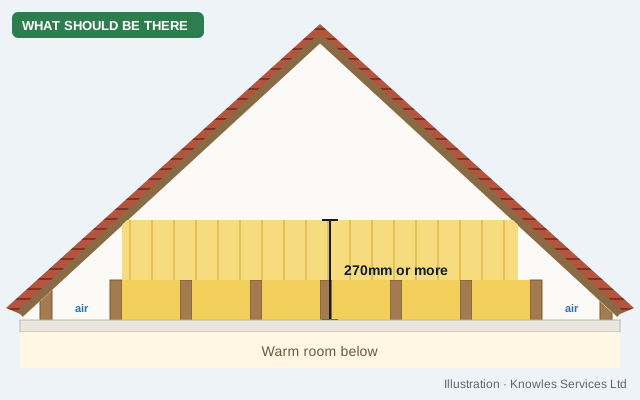
Illustration of loft insulation laid in two crossed layers to 270mm or more

Mineral wool laid to 270mm or more

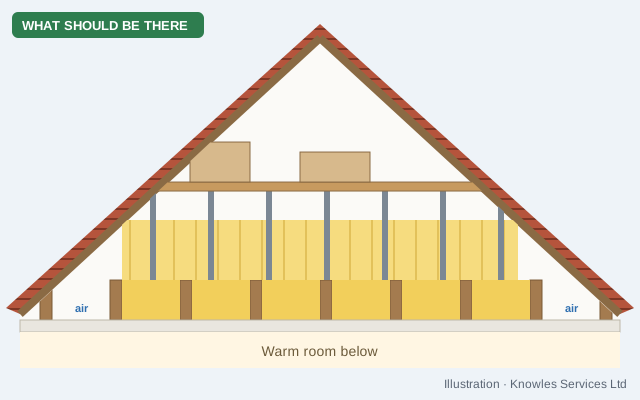
What it is: The first layer fills the space between the joists. The second layer goes across the top at right angles, so there are no gaps over the timbers. Together they reach at least 270mm, the current recommended depth.

Why it matters: It is kept back from the eaves so air can still move through the loft, and it is cut neatly around pipes, cables and fittings.

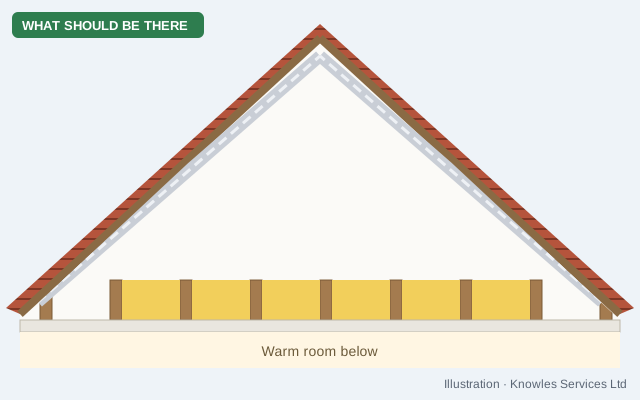
Illustration of multifoil insulation fitted to the underside of the rafters

Multifoil on the rafters

What it is: A thin, layered foil insulation fixed across the underside of the rafters. It insulates and reflects heat, and with the joins taped it also works as a vapour control layer.

Why it matters: It is a good option where there is no roof felt, or the felt has failed, and for loft rooms and the eaves behind them, like my job in a Chingford loft room.

Illustration of raised loft boarding on legs above full-depth insulation

Raised boarding on legs

What it is: Boards raised on legs above the joists, with the full depth of insulation underneath.

Why it matters: You keep your storage space without crushing the insulation.

The details that make the difference

  • Ventilation kept clear at the eaves, to reduce the risk of condensation.
  • Gaps in the ceiling sealed, around light fittings, pipes and cables, so warm, damp air doesn't leak into the loft, using fire-rated covers over recessed lights.
  • The loft hatch insulated and draught-proofed, because an uninsulated hatch lets heat straight out.
  • Pipes and tanks insulated so they don't freeze, but not underneath the water tank, so a little warmth from below keeps it from freezing.

Questions about loft insulation types

How thick should loft insulation be?

The current recommendation is at least 270mm of mineral wool, usually laid in two layers: one between the joists and one across them.

Can new insulation go on top of old insulation?

Yes, if the old insulation is dry, clean and lying flat. If it is damp, dirty, full of droppings or vermiculite, it needs dealing with first.

How long does loft insulation last?

Mineral wool kept dry and not squashed lasts for decades. It stops working when it gets damp, dirty or crushed under boards and boxes.

I think my loft has vermiculite. What should I do?

Leave it alone and don't store things on it or sweep it. Book a survey and I'll tell you honestly what I see. If it needs testing or a licensed specialist, I'll explain that before anything else is done.

How long does the work take?

Most lofts are done in a single day, including clearing out the old insulation where that's needed.

Not sure what's in your loft?

I'll come and look, show you photos of what I find and explain it in plain English. The survey is free and there's no obligation.

Call 0800 772 0724 Free survey